Through a collaboration with Germany’s Max Planck Institute, UC Davis Ph.D. student Toulik Maitra is developing computational tools to accelerate the design of organic semiconductors that could help advance flexible electronics and more efficient OLED displays.
White and rosé wines can turn cloudy due to protein instability, requiring time-consuming bentonite clay treatment. UC Davis chemical engineers are developing a faster, reusable resin-based method that reduces waste, minimizes wine loss and could transform how winemakers stabilize wines.
With cocoa crops increasingly threatened by climate change, UC Davis engineers are helping develop cultured chocolate grown directly from plant cells. The burgeoning technology could transform how chocolate is produced while making the treat more sustainable and resilient.
Slippery, drippy goop makes Ralstonia bacteria devastating killers of plants, causing rapid wilting in tomato, potato and a wide range of other crops, according to new research. The work, published Jan. 22 in Proceedings of the National Academy of Sciences, comes from an unusual collaboration between plant pathologists and engineers at the University of California, Davis.
The Faculty Fellows Program has selected Assistant Professor Surl-Hee (Shirley) Ahn and Associate Professor Jiandi Wan, who will collaborate with investigators at Lawrence Livermore National Laboratory on research and workforce development in the fields of energy resilience and battery technology.
Researchers at the University of California, Davis, have been awarded a $3 million National Science Foundation grant to develop new technologies and workforce training programs to grow plants in low-resource environments both on Earth and in space.
UC Davis chemical engineering Ph.D. student Rajat Goel is using supercomputing and quantum chemistry to study how hydrogen binds to uranium oxide — a step toward safer nuclear waste storage. His work could help make next-gen nuclear energy cleaner and more reliable.
UC Davis researchers are uncovering how microscopic airborne droplets form during speech and contribute to the spread of pathogens. Their work could lead to better strategies for improving indoor air quality, reducing disease transmission and understanding why some people emit more aerosols than others.
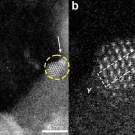
Noble metals such as platinum can make useful catalysts to accelerate chemical reactions, particularly hydrogenation (adding hydrogen atoms to a molecule). The research team led by Professor Bruce Gates at the UC Davis Department of Chemical Engineering is interested in making platinum catalysts that are highly efficient and stable during chemical reactions.
This summer, a multidisciplinary group of undergraduate students participated in a biomanufactured foods research challenge. Now, they are taking their project — turning agricultural waste into food using fungi — to Washington, D.C.
Professor of Chemical Engineering Adam Moulé and his lab have developed a novel method of patterning semiconducting polymers, a notoriously difficult material, using existing tools, paving the way for endless possibilities for sensors and optics.
At UC Davis, the chemical engineering Ph.D. student and iCAMP researcher aims to lower the production costs of cultivated meat, making it a sustainable, affordable solution for a global problem.
UC Davis researchers partnered with Oak Ridge National Laboratory to design a new device that can use neutrons to measure molecules in optically excited states. It's a potential game-changer to study materials that will increase the efficiency of photovoltaic solar cells.
A professor and alum of UC Davis collaborated with researchers at Oak Ridge National Laboratory to develop a rotating sample holder that enables new types of neuron experiments.
The Ahn Lab in the Department of Chemical Engineering is pioneering groundbreaking tools for new research that could lead to more effective pain therapies.