White and rosé wines can turn cloudy due to protein instability, requiring time-consuming bentonite clay treatment. UC Davis chemical engineers are developing a faster, reusable resin-based method that reduces waste, minimizes wine loss and could transform how winemakers stabilize wines.
With cocoa crops increasingly threatened by climate change, UC Davis engineers are helping develop cultured chocolate grown directly from plant cells. The burgeoning technology could transform how chocolate is produced while making the treat more sustainable and resilient.
The American Chemical Society selected Distinguished Professor Emerita of Chemical Engineering Karen McDonald to receive the 2026 Biotechnology and Bioengineering Gaden Award, which honors exceptional work in the field and a paper detailing innovative research.
Professor of Teaching Jason White is reimagining a chemical engineering course to create a classroom that is welcoming and accessible for neurodivergent learners. Discover how he is using Universal Design for Learning to make engineering education inclusive for all.
Slippery, drippy goop makes Ralstonia bacteria devastating killers of plants, causing rapid wilting in tomato, potato and a wide range of other crops, according to new research. The work, published Jan. 22 in Proceedings of the National Academy of Sciences, comes from an unusual collaboration between plant pathologists and engineers at the University of California, Davis.
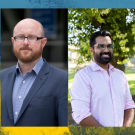
The Faculty Fellows Program has selected Assistant Professor Surl-Hee (Shirley) Ahn and Associate Professor Jiandi Wan, who will collaborate with investigators at Lawrence Livermore National Laboratory on research and workforce development in the fields of energy resilience and battery technology.
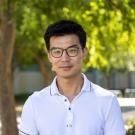
Driven by a desire to cure diseases, Kevin Zhongchao Zhao joins UC Davis as a chemical engineering faculty member who aims to create targeted therapies for cancer by engineering virus-like nanoparticles.
UC Davis researchers are uncovering how microscopic airborne droplets form during speech and contribute to the spread of pathogens. Their work could lead to better strategies for improving indoor air quality, reducing disease transmission and understanding why some people emit more aerosols than others.
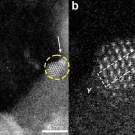
Noble metals such as platinum can make useful catalysts to accelerate chemical reactions, particularly hydrogenation (adding hydrogen atoms to a molecule). The research team led by Professor Bruce Gates at the UC Davis Department of Chemical Engineering is interested in making platinum catalysts that are highly efficient and stable during chemical reactions.
Professor of Chemical Engineering Adam Moulé and his lab have developed a novel method of patterning semiconducting polymers, a notoriously difficult material, using existing tools, paving the way for endless possibilities for sensors and optics.
UC Davis researchers partnered with Oak Ridge National Laboratory to design a new device that can use neutrons to measure molecules in optically excited states. It's a potential game-changer to study materials that will increase the efficiency of photovoltaic solar cells.
Recipients of the Chancellor’s Fellowship for Diversity, Equity and Inclusion are honored for their work going above and beyond to help students from underrepresented backgrounds succeed at UC Davis.
A professor and alum of UC Davis collaborated with researchers at Oak Ridge National Laboratory to develop a rotating sample holder that enables new types of neuron experiments.
Each month, UC Davis will profile faculty members in their Among the Academies series to honor their contributions to scientific research and knowledge. This month, they featured Bruce Gates, professor of chemical engineering, who has been with UC Davis Since 1992.
Each month, UC Davis will profile faculty members in their Among the Academies series to honor their contributions to scientific research and knowledge. This month, they featured Jennifer Sinclair Curtis, who served as Dean of the College of Engineering from 2015-2020.