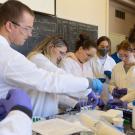
For the first time on a commercial scale, researchers from UC Davis have controlled the redox potential during a wine fermentation, an important step in making winemaking more efficient and reproducible and paving the way for a new generation of experiments in viticulture, microbiology and fermentation.
For UC Davis Chemical Engineering Professor Greg Miller, a new course began with a single sip.
While tasting whiskey with friends, he noted an unusual peppery flavor and became curious how it was produced. The more he looked, the more he realized that there wasn’t an easy answer, as most whiskey distillers rely on tried-and-true recipes instead of science.
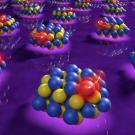
Reporting in the journal Nature, researchers including Distinguished Professor Bruce Gates showed that platinum atoms could be confined on small cerium-oxide islands within a porous material to catalyze reactions without sticking to each other, which has been a major stumbling block for their use.
Engineering in the food industry requires a knowledge of food processes, science, chemical engineering principles and culture. This spring, chemical engineering undergraduate students learned about all four during a guest lecture and Native American cooking demonstration from Café Ohlone, the world’s first and only Ohlone restaurant.
With a new $3.97M project, Chemical Engineering Distinguished Professor Karen McDonald and her team of collaborators will explore the viability of a range of biomanufacturing technologies to produce antigens for rapid COVID-19 serological test kits.
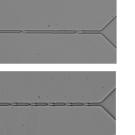
Blood and cerebrospinal fluid flow are important transport processes in the brain that occur mostly in capillaries with a diameter of 5-8 micrometers, the smallest blood vessel in the brain. To microfluidic researchers like Chemical Engineering Associate Professor Jiandi Wan, this is an opportunity to play a significant role in discovering how the brain works.
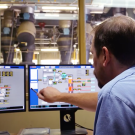
Can we optimize how we cool our buildings without compromising campus comfort?
This question, the focus of a long-standing partnership between UC Davis Facilities Management and UC Davis Chemical Engineering (Process Systems Engineering), has resulted in savings, greener energy use and published research.