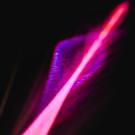
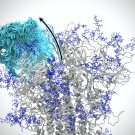
UC Davis researchers partnered with Oak Ridge National Laboratory to design a new device that can use neutrons to measure molecules in optically excited states. It's a potential game-changer to study materials that will increase the efficiency of photovoltaic solar cells.
Recipients of the Chancellor’s Fellowship for Diversity, Equity and Inclusion are honored for their work going above and beyond to help students from underrepresented backgrounds succeed at UC Davis.
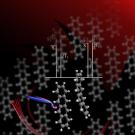
A professor and alum of UC Davis collaborated with researchers at Oak Ridge National Laboratory to develop a rotating sample holder that enables new types of neuron experiments.
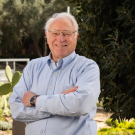
Each month, UC Davis will profile faculty members in their Among the Academies series to honor their contributions to scientific research and knowledge. This month, they featured Bruce Gates, professor of chemical engineering, who has been with UC Davis Since 1992.
Each month, UC Davis will profile faculty members in their Among the Academies series to honor their contributions to scientific research and knowledge. This month, they featured Jennifer Sinclair Curtis, who served as Dean of the College of Engineering from 2015-2020.
Tonya Kuhl, chair of the chemical engineering department and co-director of the UC Davis Coffee Center, exchanges coffee and chemical engineering research and knowledge with Osaka University, a UC Davis Global Knowledge Partner.
Glaucia Helena Carvalho do Prado reflects on her takeaways from a DEI faculty workshop diving into disruptive speech and how to make the classroom a safe learning environment for all.
The Ahn Lab in the Department of Chemical Engineering is pioneering groundbreaking tools for new research that could lead to more effective pain therapies.
Meet Glaucia Helena Carvalho do Prado, an assistant professor of teaching in the chemical engineering department and international scholar focusing on mental health and wellness in engineering and paving the way for women and girls in STEM fields.
With the prestigious early-career faculty grant, the assistant professor of chemical engineering will investigate complex fluid dynamics of microscopic particles and support underrepresented transfer students in their STEM education.