Is cultivated meat — essentially, animal protein grown under lab conditions — a nourishing prospect to help feed the world, or is it more sizzle than steak? A consortium of researchers at the University of California, Davis, aims to explore the long-term sustainability of cultivated meat, supported by a new grant of up to $3.55 million from the National Science Foundation Growing Convergence program, in addition to previous support from the Good Food Institute and New Harvest.
Influenza viruses can spread through the air on dust, fibers and other microscopic particles, according to new research from the University of California, Davis, and the Icahn School of Medicine at Mount Sinai. The findings, with obvious implications for coronavirus transmission as well as influenza, are published Aug. 18 in Nature Communications.
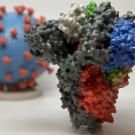
Though viruses are known for causing diseases like COVID-19, UC Davis chemical engineers Karen McDonald and Priya Shah think they can be as beneficial as they are destructive. From producing and purifying drugs for humans in space to inspiring new tools for biotechnology, viruses are being re-engineered to help humans who are suffering from injuries or diseases.
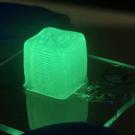
Chemical engineering assistant professor Jiandi Wan has developed a new approach to 3D printing using microfluidics, which was outlined in a new paper published in the Proceedings of the National Academy of Sciences of the United States (PNAS).
Normal speech by individuals who are asymptomatic but infected with coronavirus may produce enough aerosolized particles to transmit the infection, according to aerosol scientists at the University of California, Davis. Although it’s not yet known how important this is to the spread of COVID-19, it underscores the need for strict social distancing measures.
Chemical engineering professor Karen McDonald and her team have received funding to develop plant-based methods for producing FDA-approved drugs in under 24 hours for use in deep space. The proposal, “A Plant-Based Platform for ‘Just in Time’ Medications” is one of six to receive of a two year, $800,000 Translational Research Institute for Space Health (TRISH) grant from the Baylor College of Medicine.
A new study from UC Davis found that the louder people talk, the more airborne particles they emit, making loudness a potential factor in spreading airborne diseases. The study, led by chemical engineering Ph.D. student Sima Asadi in professor William Ristenpart’s group, looked at particle emission during speech as a function of loudness, among other factors.
For chemical engineering professor Greg Miller, whisky is serious business. A licensed distiller and whisky enthusiast, his new book Whisky Science: A Condensed Distillation is the culmination of a five-year search for the science behind the spirit, bringing together 300+ years of history, chemistry and distillation methods.
Researchers at the University of California, Davis, and the University of Alberta, Canada, have made preliminary discoveries about how Zika and hepatitis C viruses reproduce at the cellular level, providing new insight into a family of viruses that also includes West Nile and dengue. Now their cutting-edge research will be supported by a $1 million grant from the prestigious W.M. Keck Foundation.